Things to Do in the Maldives Beyond the Beach: Reefs, Boat Trips, Local Islands and Starry Nights

In this article
Updated October 2026
The best things to do in the Maldives beyond the beach happen in the water or on a boat: snorkelling the reef, diving, swimming with manta rays or whale sharks, a dolphin cruise, a sandbank picnic and a visit to an island where Maldivians live. Almost all of them are booked through the resort, many depend on the season or the weather, and a few are reason enough to choose one atoll over another. Pick the two or three that matter most, then the island that makes them easy.
How activities work on a Maldives holiday
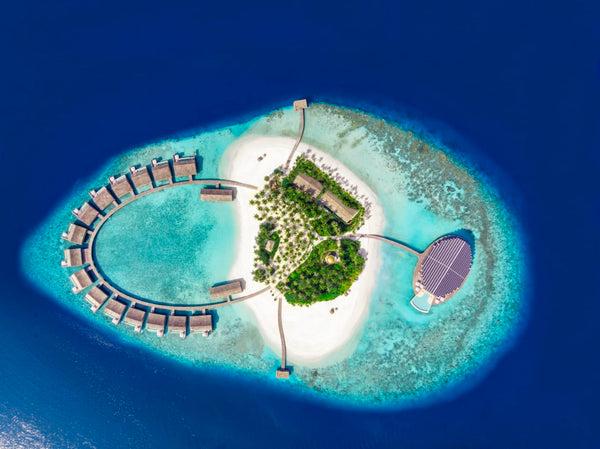
An atoll is a ring of coral reef with islands scattered around it. Most resorts have an island to themselves, inside a lagoon, the shallow, sheltered water between an island and its outer reef.
Anything beyond the island means a boat, usually a dhoni, the traditional Maldivian wooden boat, now motorised. The resort's excursions desk, dive centre or water sports team runs most trips, and a rough sea can cancel any of them, so keep a spare day.
Seasons matter too. The Maldives Meteorological Service sets the drier north-east monsoon at January to March and the wetter south-west monsoon at mid-May to November, with December and April as the months when one hands over to the other. In practice, most travellers think of the drier north-east monsoon as running roughly December to April, with calmer seas and the clearest water, and the wetter south-west monsoon as roughly May to November, with more rain, more wind and more plankton, which clouds the water but draws in mantas and whale sharks. The guide to the best time to visit the Maldives has the full calendar.
Snorkelling and the house reef
A house reef is the coral reef you can swim to from the resort itself. It is the biggest difference between one resort and the next for anyone who wants to snorkel without a boat, and since the 2024 coral bleaching, reef quality varies sharply from island to island.
Where the reef off the beach is weak, resorts run guided snorkelling trips by boat. At LUX* South Ari Atoll, for example, the lagoon is soft sand and most of the good snorkelling is on guided boat trips to the reef further out.
Before swimming out, ask where to enter and which side has current, swim with a partner, and wear reef shoes where the way in crosses rock or broken coral.
Diving, from a first try dive to the channels
Most resorts have a dive centre teaching to the standards of PADI, the Professional Association of Diving Instructors. Beginners can start with PADI Discover Scuba Diving, a try dive open to anyone aged 10 and over, to a maximum of 12 metres with an instructor. PADI's Bubblemaker lets children from 8 try scuba in water no deeper than 2 metres. The full PADI Open Water Diver course can take as little as two to four days.
Certified divers come for the thilas and the channels. A thila is a reef that rises from the floor of the atoll and stops short of the surface. A kandu, or channel, is a gap in the outer reef where the tide flows in and out, bringing clear water and big fish. A drift dive is one where divers let the current carry them along the reef, and channel drifts are for experienced divers.
After several days of diving, guidance from Divers Alert Network (DAN) is at least 18 hours between the last dive and the flight home. The guide to diving in the Maldives for beginners covers courses and choosing a resort.
Manta rays and whale sharks
Mantas move with the monsoon. In the south-west monsoon, roughly May to November, they gather on the eastern sides of the atolls, most famously at Hanifaru Bay in Baa Atoll, a small protected bay where they feed on plankton. Diving has been banned inside Hanifaru since 2012, so every visitor snorkels, with a certified guide and strict limits on boats and time in the water. Four Seasons Resort Maldives at Landaa Giraavaru in Baa runs a Manta-on-Call service that alerts guests when mantas are spotted nearby and takes them out by speedboat.
Whale sharks are a year-round sight in the South Ari Marine Protected Area, at the southern end of Ari Atoll. Boats search the reef edge and swimmers slip in on snorkel, keeping at least 3 metres from the shark and never touching it. LUX* South Ari Atoll sits beside the protected area, and the resort's own marine biologist leads its whale shark trips by dhoni. Guest houses on Dhigurah and Dhangethi, local islands close by, run trips too.
The guide to Maldives marine life by atoll and season covers where and when.
Dolphin cruises
Spinner dolphins are the ones most visitors see. They feed in the open ocean at night and rest inside the atolls by day, so cruises go out early or in the late afternoon, when pods move through the channels and often ride the bow. Responsible operators keep guests on deck, out of the water. Sightings are frequent but never certain; the dolphin guide explains how to choose a good trip.
Fishing at sunset
The classic trip is hand-line fishing from a dhoni around sunset, usually about two hours over the reef with the crew baiting the lines. Big-game fishing for tuna, wahoo and sailfish happens in the open ocean outside the atoll, and rough seas can call it off. Protected species, including turtles, rays and almost all sharks, go straight back, and fishing from a resort jetty or beach needs the resort's permission. The fishing guide has the detail.
Sandbank picnics
A sandbank is a strip of sand that rises out of the sea. Resorts take guests out by boat for a picnic, a snorkel or a private dinner on the sand. It depends entirely on the weather, so book it early in the stay and keep a second date in reserve.
Local-island visits: what to wear and what to expect
A local island is an inhabited island where Maldivians live and work, with a mosque, small shops and cafés. Many resorts run boat trips to one nearby, and the rules are the same on every inhabited island. Cover shoulders and knees, men as well as women, in the village, the shops and on the ferry; swimwear belongs on the designated bikini beach and on the boats. No alcohol is served on any local island, and none can be carried from a resort. Friday is the weekly holy day: shops close around the midday prayers and most public ferries stop, so a Friday visit is a quiet one. Ask before photographing people, especially women and children.
The guide to the Maldives local islands compares them one by one, from Maafushi near the airport to Dhigurah in South Ari.
Malé, the fish market and the old city
Malé is the capital, a small, crowded island about ten minutes by ferry from Velana International Airport. The fish market stands on the northern waterfront, and from the afternoon the tuna boats tie up across the road and the catch is cut on the tiled floor. The produce market is a block away, and the coral-stone Old Friday Mosque and the National Museum are a short walk. Malé is dry, and the same dress rules as on any local island apply.
Bodu beru and Maldivian culture
Bodu beru, Dhivehi for "big drums", is the traditional music of the Maldives: drums of coconut wood with goatskin heads, a lead singer, and a beat that starts slow and builds until the audience is dancing. Many resorts put on a performance, and some teach guests the basic beats. The most authentic performances happen on local islands and at festivals such as Eid al-Adha, so ask the guest house or the resort what is on.
Cooking classes and Maldivian food
Maldivian cooking rests on tuna, coconut and rice, and will feel familiar to anyone from Kerala. Some resorts run Maldivian cooking classes. Four Seasons Resort Maldives at Kuda Huraa, 25 minutes from the airport by its own speedboat, has Baraabaru, an Indian restaurant whose chef runs a half-day Indian cooking class. The guide to Maldivian food covers what to try.
Spa and wellness
Most resorts have a spa and yoga. A few go further: AyurMa at Four Seasons Resort Maldives at Landaa Giraavaru runs Ayurveda programmes, Panchakarma among them, with Ayurvedic physicians. Divers should note PADI's advice to avoid deep-tissue massage for at least 12 hours after a dive. The wellness guide explains how to choose a spa island.
Yacht and sunset cruises
The easiest way onto the water is a sunset cruise on a dhoni. A day charter on a private boat adds a sandbank, a snorkel stop and open water, with the villa still there at night. A crewed yacht for an overnight, or a liveaboard, a small ship that carries divers or surfers between atolls for about a week, makes the boat the holiday itself. The yacht charter guide sets out when each one makes sense.
Underwater dining
Several resorts have a restaurant in a glass room on the seabed, where reef fish swim past the table. 5.8 Undersea Restaurant at Hurawalhi Maldives in Lhaviyani Atoll takes its name from its depth, 5.8 metres below the surface, and is an all-glass room built for no more than ten couples. The guide to underwater restaurants and villas compares them all.
Surfing
The Maldives has real reef breaks, and the main surf season runs roughly from April to October, through the south-west monsoon. The breaks closest to the airport are in North Malé Atoll, among them Sultans, Jailbreaks off Himmafushi, and Chickens and Cokes near Thulusdhoo, local islands with their own surf guest houses.
Surf is what sets Four Seasons Resort Maldives at Kuda Huraa apart. Its Tropicsurf coaches teach beginners in the lagoon first, then take surfers by boat to the nearby reef breaks, among them Sultans. The waves break over shallow coral, so beginners should learn with a coach.
Water sports: with and without an engine
Non-motorised sports, such as kayaks, paddleboards, windsurfing and catamaran sailing, are the quiet option for a calm lagoon. Motorised sports, such as jet skis, parasailing, waterskiing, wakeboarding and seabobs (small underwater scooters), run with the water sports staff and are booked by the session. Wind decides what runs on a given day, and the list differs between resorts, so check it before choosing an island for one sport.
Stargazing
Soneva Jani in Noonu Atoll has its own overwater observatory with a 16-inch telescope and a resident astronomer, who takes guests through the sky after sunset; depending on the season, that can mean the rings of Saturn and the moons of Jupiter. At So Starstruck, the resort's dining observatory, the tables sit around the telescope. It needs a clear sky, so book early in the stay.
Glowing beaches
On some nights the water at the shoreline glows blue. Microscopic plankton flash when the water moves around them, and blooms wash ashore with the tides. Vaadhoo in Raa Atoll is the best-known spot, but the glow appears across the atolls, even on the city beach at Hulhumalé beside the airport. Nobody can predict it. Treat it as a gift if it happens.
What suits couples, families and active travellers
Couples: a sunset cruise, a sandbank dinner, a meal under the sea, the spa and a night under the stars.
Families: an easy house reef, a dolphin cruise, a local-island visit and a resort marine centre, such as the turtle rehabilitation centre at Four Seasons Resort Maldives at Kuda Huraa or the Marine Discovery Centre at Four Seasons Resort Maldives at Landaa Giraavaru.
Active travellers: build the trip around one big thing: the channels of Ari or North Malé for divers, Hanifaru Bay in season for mantas, South Ari for whale sharks, North Malé for surf, or big-game fishing in the open ocean.
Which experiences need a boat, a season or a booking
A boat trip: whale sharks, Hanifaru Bay, dolphins, fishing, sandbanks, local islands, Malé from a resort, the surf breaks and most diving.
The right season: mantas at Hanifaru from roughly May to November; surf from roughly April to October; the clearest water for diving and underwater dining from roughly December to April. Whale sharks stay in South Ari all year. Dolphins and sandbanks need a calm day rather than a particular month.
Booking ahead: underwater restaurant tables, the observatory and whale shark trips have few places, so reserve them early. Seaplanes in the Maldives fly in daylight only, so on a seaplane island a late landing at Velana means a first night near Malé.
Who this suits
The Maldives rewards travellers who choose the experience first and the island second. A couple set on mantas should go to Baa between May and November and accept some rain; a family who want turtles and calm water should pick the house reef before the villa; a surfer should look at North Malé between April and October. Booking on villa photographs alone, and planning the days on arrival, is how the one trip that mattered ends up a long boat ride away, or out of season.
Common questions
What is there to do in the Maldives besides the beach?
Plenty, most of it on or under the water: snorkelling and diving, manta rays and whale sharks, dolphin cruises, sunset fishing, sandbank picnics, surfing and water sports. On land, there are local-island visits, Malé's fish market, bodu beru drumming, cooking classes, spas and, at a few resorts, an observatory for stargazing. Most trips are booked through the resort.
What can non-swimmers do in the Maldives?
A great deal. Dolphin cruises, sunset cruises and sunset fishing all happen on deck, and a sandbank picnic needs nothing more than a walk in the shallows. Underwater restaurants show the reef through glass, and local-island visits, Malé, the spa, cooking classes and stargazing are all on dry land. Snorkelling lessons in a calm lagoon are a gentle first step.
Can you visit a local island from a resort?
Yes. Many resorts run boat trips to a nearby inhabited island to see the village, the mosque and the shops. Cover shoulders and knees, men and women alike, and keep swimwear for the bikini beach. No alcohol is served on local islands, and on Fridays shops close around the midday prayers.
When can you see manta rays and whale sharks in the Maldives?
Mantas are seen all year but follow the monsoon. From roughly May to November they gather on the eastern sides of the atolls, including Hanifaru Bay in Baa Atoll, which is snorkel-only. Whale sharks stay in the South Ari Marine Protected Area all year, and trips there are on snorkel. Sightings are never guaranteed.
Can you surf in the Maldives?
Yes. The main season runs roughly from April to October. The most accessible breaks are in North Malé Atoll, close to the airport, including Sultans, Jailbreaks, Chickens and Cokes, with local surf islands such as Thulusdhoo and Himmafushi nearby. The waves break over shallow reef, so beginners should take lessons with a coach.
Are the glowing beaches in the Maldives real?
Yes. Microscopic plankton in the water give off blue light when disturbed, and when blooms wash ashore the shoreline sparkles at night. Vaadhoo in Raa Atoll is the best-known spot, but the glow has been seen across the country, including near Malé. It cannot be predicted or promised, so treat a sighting as luck.