Malé city guide: getting there, what to see and where to stay

In this article
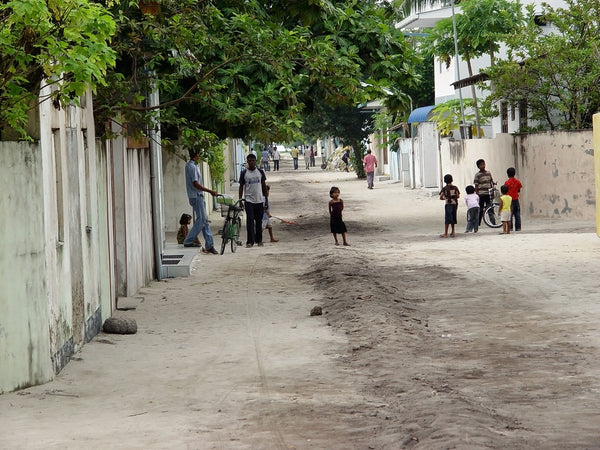
Malé is the capital of the Maldives: an island of under two square kilometres, ten minutes by ferry from Velana International Airport, where about 137,000 people live, work and ride their scooters through narrow streets. It has the country's oldest mosque, its fish market and its museum, and it is the one place in the Maldives that feels like a city.
Few holidaymakers stay more than a night, and that is the right instinct. A day in Malé is a good look at how Maldivians actually live; a week would be a long time without a beach you can swim from in a bikini or a drink with dinner.

Malé at a glance
Population and people
The 2022 census counted 137,238 people across Malé's four wards: Henveiru, Galolhu, Machchangolhi and Maafannu. About a quarter of them are foreign nationals, many of them migrant workers who keep the city's shops, building sites and cafés running. Maafannu, on the west side, is the largest ward, with more than 47,000 residents.
Malé City is bigger than the island. It also takes in Villimalé, Hulhumalé and the airport island of Hulhulé, and the census counted 211,908 people across the whole city, about two in five of everyone living in the Maldives. Packing that many people onto so little land explains almost everything about the place: the tall, narrow buildings, the traffic, and the steady move of families across the bridge to Hulhumalé.
A short history of the King's Island
For centuries Malé was the seat of the sultans who ruled the islands, and it was known as the King's Island. The Moroccan traveller Ibn Battuta stayed here in 1343. In the 17th century Sultan Muhammad Imaduddin walled the town, and the walls stood until they were pulled down in 1925 to 1927. The monarchy ended in 1968, and much of the old royal palace was cleared to remodel the city.
The island has been made bigger more than once. By 1986 the shallow lagoon around it had been reclaimed to make room for more housing. A year later, in 1987, high seas flooded about a third of the city. Japan then paid for a breakwater and sea walls that now run around the whole island, completed in 2002. When the 2004 tsunami reached Malé, the water flooded the streets, but no one in the city was killed.
Getting to Malé from the airport
The airport sits on its own island, Hulhulé, just across the water from Malé. Two ways across work at any normal arrival time.
The airport ferry
Public ferries leave from the jetty in front of the arrivals hall and reach Malé's northern waterfront in about ten minutes. They run frequently through the day and less often late at night. It is the classic way into the city, and the short crossing gives a first view of the skyline from the water.
By road over the Sinamalé Bridge
Since 2018 the Sinamalé Bridge has joined the airport island to Malé. Taxis wait outside arrivals around the clock, and the drive into the city takes about fifteen to twenty minutes, depending on traffic at the Malé end. Public bus route R3 runs between the airport and West Park in Malé about once an hour, from early morning until after midnight.
Malé or Hulhumalé for a night? For a stopover before or after a resort, Hulhumalé is usually the easier choice: closer to the terminal, quieter, with a long beach and more space. Malé is the better base for a day of sightseeing, or for an early ferry to a local island. The Hulhumalé guide covers the other option.
Ferries on from Malé
Villimalé. Ferries to Villimalé, the quiet island ward just west of Malé, leave from the Villingili Ferry Terminal in Maafannu around the clock, and the crossing takes about ten minutes. The Villimalé guide covers the island.
The local islands. The government MTCC ferries to Maafushi, Gulhi and other local islands sail from Malé. Since March 2026, road works on the waterfront road have moved atoll ferries from the Henveiru terminal to the Villingili and Hulhumalé terminals, so check where your ferry leaves from before setting out. Most guest-house guests travel by scheduled speedboat from the airport instead, as the Maafushi guide explains.
Rules worth knowing
Alcohol. Malé is dry. No hotel, restaurant or shop sells alcohol, and none may be brought in. The nearest bar is at Hulhule Island Hotel on the airport island.
Dress. Dress conservatively everywhere in the city: shoulders and knees covered, for men as well as women. Bikinis are not allowed on Malé's beaches, and most local people swim fully clothed. Public displays of affection are frowned on.
Mosques. Non-Muslim visitors can enter the Islamic Centre outside prayer times, dressed modestly, with photography not allowed inside. Hukuru Miskiy is best admired from outside unless you have arranged a visit.
Fridays. Shops, museums and many cafés close for Friday prayers around midday. Through the rest of the week, shops close briefly at each prayer time.
Money. Cash machines give rufiyaa only. They usually accept Visa and Mastercard but often not RuPay cards, so Indian travellers should carry a Visa or Mastercard as well. US dollars are widely accepted, with change given in rufiyaa.
Things to see in Malé
Everything below sits within a twenty-minute walk of the airport ferry. Most visitors cover the main sights in half a day on foot.
Hukuru Miskiy, the Old Friday Mosque

The most important historic building in the Maldives. It was built in 1656 to 1658 under Sultan Ibrahim Iskandar I, on the site of a mosque from 1153, with walls of interlocking, intricately carved blocks of coral stone. Its minaret dates from 1675. Across the road stands Medhu Ziyaaraiy, the shrine of the scholar credited with bringing Islam to the islands in 1153.
The Islamic Centre and Grand Friday Mosque

The golden dome of the Islamic Centre has been the landmark of the skyline since it opened in 1984. The prayer hall holds about 5,000 worshippers.
The National Museum and Sultan Park

Sultan Park occupies the grounds of the old royal palace, a shaded garden in the middle of the city with free entry. The National Museum stands inside it, in a building designed and paid for by China and opened in 2010. Its collection covers the sultans' era and the centuries before Islam, including an 11th-century coral head of the Buddha. Much of the pre-Islamic collection was badly damaged in 2012. The museum is closed on Fridays.
Mulee-aage

An early 20th-century mansion near Hukuru Miskiy, built from 1914 to 1919 for the heir of Sultan Shamsuddeen III. It is now the official residence of the President, so it is seen from the street only.
The fish market and the local market

On the northern waterfront, just west of Republic Square with its giant national flag, the fish market is where the day's tuna comes ashore and is cut up on the tiled floor. It is busiest in the afternoon, when the boats come in. The local market next door sells fruit, vegetables and the smoked and dried tuna that flavours Maldivian cooking. The Malé fish market guide has the full story.
The beaches and the waterfront

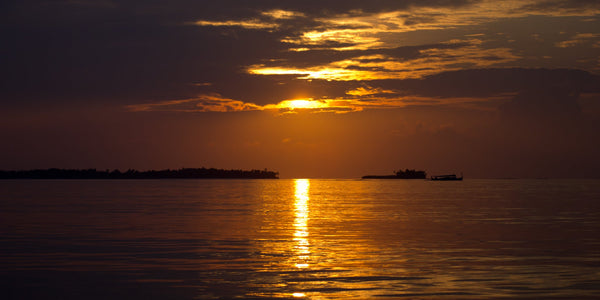
Malé's two swimming beaches are both man-made. Artificial Beach, on the east coast about ten minutes' walk from the airport ferry, is where local families gather in the evening. Rasfannu, on the west coast, opened in 2016 and is larger. Both are good places to watch city life at sunset, but they are town beaches with town rules, and swimwear has to cover knees and shoulders. The city's Tsunami Monument remembers the Maldivians who died in the 2004 tsunami.
Majeedhee Magu and the cafés

Majeedhee Magu runs east to west across the island and is Malé's main shopping street, with clothes, electronics and everyday shops open until about 22:00. The city is full of small local cafés, called hotaa, serving tea with plates of hedhikaa, the fried and baked short eats eaten in the late afternoon. Indian, Sri Lankan, Thai and Western food is easy to find, and vegetarian food is widely available.
Half a day in Malé. Take the morning ferry from the airport, walk to Hukuru Miskiy and the Islamic Centre, spend an hour in Sultan Park and the museum, and finish at the fish market in the afternoon when the boats land. Remember that the museum and most shops close at Friday midday.
Who stays in Malé
Business and official visits. The ministries, banks and company offices are all here, and the city hotels are built around them.
An early ferry or a day of sightseeing. Travellers heading to a local island by public ferry, or who want a full day in the capital, save time by staying on the island.
A stopover on a budget. Malé's guest houses and small hotels are close to the airport by ferry or road, with every kind of food on the doorstep.
When to go
Malé works in every month. The dry northeast monsoon, roughly December to April, brings sunshine and calm seas for the ferries. The southwest monsoon, roughly May to November, brings heavy showers that can flood the low streets for an hour or two. During Ramadan the city keeps different hours: cafés open after sunset and stay busy late into the night.
Hotels and guest houses in Malé
Malé has 27 registered places to stay: seven hotels, from the 223-room Barceló Nasandhura and Hotel Jen to small business hotels, and twenty guest houses. Rooms are usually compact, and views are mostly of the city or the harbour.

The Somerset Hotel
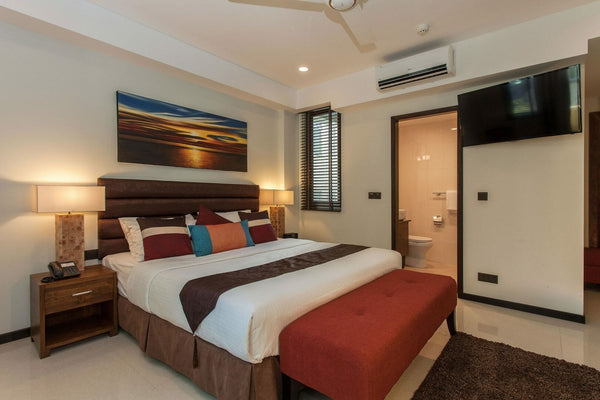
A small city hotel in Malé, with double rooms and suites that have their own sitting rooms, a lobby lounge and a restaurant serving a buffet breakfast. It suits a night or two in the capital, for business or a day of sightseeing. Stays are priced on request for your dates.
Every registered hotel and guest house in Malé
The Ministry of Tourism register lists these hotels and guest houses on Malé island, with the number of rooms each is licensed for. Names in bold link to the hotel's page on this site. More are added as they join, and the rest can still be priced on request.
- Barceló Nasandhura223 rooms
- Beehive Premier23 rooms
- Champa Central Hotel74 rooms
- Dhimyaath Stay55 rooms
- Flora Inn30 rooms
- The Grand View21 rooms
- Hotel Flora36 rooms
- Hotel Jen Malé117 rooms
- LemonRock Comfort45 rooms
- Maagiri Hotel52 rooms
- Manhattan Business Hotel28 rooms
- Marukab Plaza40 rooms
- Mookai Hotel42 rooms
- Octave14 rooms
- Off Day Inn15 rooms
- The Park House20 rooms
- Sala Boutique Residence6 rooms
- Samann Grand26 rooms
- Skai Lodge13 rooms
- The Somerset Hotel30 rooms
- Summer Beach28 rooms
- Tour Inn6 rooms
- Tourist Inn8 rooms
- Tourist Inn Grand8 rooms
- Umet Seaview25 rooms
- Unima Grand39 rooms
- Zan Lodge9 rooms
Source: Ministry of Tourism, Maldives, register of tourist hotels and guest houses, October 2026. The register files Malé, Villimalé and Hulhumalé together under Malé City; the properties above are those with an address on Malé island. Room counts are the licensed totals and change as properties expand.
Every guest house and city hotel on this site, with live prices for your dates, is on the guest houses and city hotels page.
Who Malé isn't for
Anyone hoping for a beach holiday. Malé's beaches are small, man-made and public, and the city is about traffic, noise and street life rather than lagoons.
Anyone who wants a drink, or a quiet night. Malé is dry, busy and loud until late, especially in Ramadan.
Most travellers on a short stopover. If the only aim is a bed near the airport, Hulhumalé is closer to the terminal, quieter and has a beach. For the holiday itself, a resort or a local island is the better spend, as set out in local island or resort island.
Comparing islands? The Maldives local islands guide sets every island guide on this site side by side, by transfer time from the airport and what each island does best.
Common questions
How do I get from Malé airport to Malé city?
By public ferry from the jetty in front of arrivals, which takes about ten minutes and runs frequently through the day, or by taxi or the R3 bus across the Sinamalé Bridge, about fifteen to twenty minutes depending on traffic. Taxis wait outside arrivals at any hour.
Is Malé worth visiting?
For half a day or a day, yes. Hukuru Miskiy, the Islamic Centre, the National Museum and the fish market give a real picture of Maldivian life that no resort can. As a place to spend a holiday, no: there is no bikini beach, no alcohol and little calm.
What is there to do in Malé in one day?
Walk to Hukuru Miskiy and Medhu Ziyaaraiy, see the golden-domed Islamic Centre, visit Sultan Park and the National Museum, then go to the fish market in the afternoon when the boats come in. End with tea and short eats in a local café and sunset at Artificial Beach.
Can tourists stay in Malé?
Yes. The Ministry of Tourism register lists 27 hotels and guest houses on Malé island, from large business hotels such as Barceló Nasandhura and Hotel Jen to small guest houses. Malé is dry, so none of them serve alcohol, and dress in the city is conservative.
Malé or Hulhumalé for a night near the airport?
Hulhumalé suits most travellers on a stopover: it is closer to the airport, quieter, with a long beach. Malé is better for a full day of sightseeing or an early public ferry to a local island. The two are linked by road across the Sinamalé Bridge.
Can you wear shorts in Malé?
Knee-length shorts are fine for men, but short shorts and sleeveless tops draw attention. Cover shoulders and knees in the city and when visiting mosques, men and women alike. Bikinis are not allowed on Malé's beaches, where most local people swim fully clothed.
Malé is the Maldives at full volume: a crowded, working capital with centuries of history packed into a few streets. Give it a morning or a day, start at the Old Friday Mosque and end at the fish market, and save the beach for the islands. The Malé hotel on this site, and every guest house and city hotel near the airport, are on the guest houses and city hotels page.