Fishing in the Maldives: Sunset Hand Lines, Big Game and the Rules on What Goes Back

In this article
Updated October 2026
Visitors fish in the Maldives from a boat, with a crew, on a trip run by a resort, a guest house or a licensed operator. There are two main kinds: traditional hand-line fishing over the reef around sunset or after dark, and big-game fishing in the open ocean beyond the atoll for tuna, wahoo, sailfish and marlin. Fishing on your own from a resort beach or jetty needs the resort's permission, and a long list of species must go straight back into the sea.
How fishing in the Maldives works
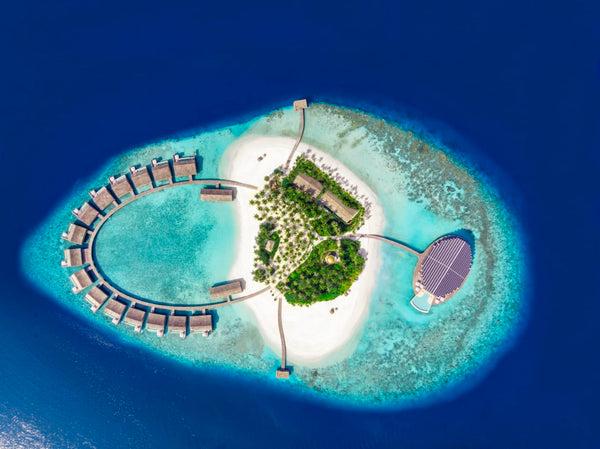
A little geography explains almost everything. An atoll is a ring of coral reef with islands scattered around it. Each island sits in its own lagoon, the shallow, sheltered water between an island and its outer reef, and the ring as a whole encloses a wide, calmer basin of water. Outside the ring, the seabed falls away into the deep Indian Ocean. Gaps in the reef, called channels or kandu in Dhivehi, carry the tide in and out of the atoll, and strong currents with it.
Those two worlds give the two kinds of fishing. Inside the atoll, boats stop over patches of reef and fish near the bottom for reef species such as snapper and grouper. Outside it, boats run along the outer edge of the atoll and tow lures for fish of the open ocean. A paper by the government's Marine Research Centre records that big-game anglers staying at resorts fish this way, with rod, reel and lures, from speedboats and dhonis, and that billfish such as sailfish and marlin are taken along the outer edge of the atolls.
A dhoni is the traditional Maldivian wooden boat, and it is the usual boat for sunset fishing trips. Fishing also runs deep in Maldivian life. Tuna is still caught by pole and line, one fish at a time, a method the national tourism board describes as centuries old, and fishing remains one of the country's main industries. A fishing trip is one of the few holiday activities that touches that working life directly.
Sunset and night fishing with a hand line
This is the trip most visitors take, and it needs no experience at all. The crew take a dhoni out to a stretch of reef in the late afternoon, stop the boat and hand each guest a hand line: a length of fishing line with a baited hook, wound on a spool rather than fixed to a rod. You let it down to the bottom, wait for a tug and pull the fish up by hand. Some boats fish with live bait.
The resort sunset trips described below last about two hours. The appeal is the setting as much as the catch: a wooden boat on calm water and the sun going down over the atoll. Night fishing works the same way after dark, and guest houses on local islands offer it too.
What comes up depends on the reef and the evening. Snappers and groupers are the familiar catch, along with other fish that live near the bottom. Some evenings bring a surprise from open water, and some bring nothing, which is part of fishing everywhere. There is no casting to learn and no heavy tackle.
Big-game fishing in the open ocean
Big-game fishing, also called sport fishing, is a different day out. The boat leaves the shelter of the atoll for deep water, and the main method is trolling: lures or baits towed behind the moving boat at speed, with rods set in holders until a fish strikes. Some boats also offer jigging, where a heavy metal lure is worked up and down in deep water, and popping, where a surface lure is cast and pulled back in short splashes to draw a strike from giant trevally.
The fish are the big pelagics, the species of the open ocean. The regular targets are yellowfin tuna, dogtooth tuna, wahoo, mahi-mahi, sailfish, blue and black marlin, and barracuda. Giant trevally, a heavy, hard-fighting predator often shortened to GT, is another prized target, and the national tourism board notes that it gives strong fights all year round. In Addu Atoll, in the far south, the board's own atoll pages list a team of fishermen running trolling, jigging, popping and deep-drop trips, for groupers and snappers as well as tuna, sailfish and marlin.
A big-game trip is a longer commitment than a sunset trip: a morning or an afternoon at sea, and sometimes a full day. Nothing is guaranteed: the open ocean is big, the fish move, and a day without a strike happens to experienced anglers too.
One rule shapes where sport boats go. The government places fish aggregating devices, or FADs, in Maldivian waters: anchored buoys that draw tuna. Some are set for the pole-and-line tuna boats and some for sport and recreational fishing. Under the General Fisheries Regulation, as amended in 2025, sport and recreational fishing is banned within three miles of a pole-and-line FAD. Those waters are kept for the tuna boats.
What you can keep and what goes back
The Maldives protects a long list of marine life by law. The General Fisheries Regulation, issued in 2020, names species that may not be caught, killed, harmed or kept on board any boat in Maldivian waters. On a fishing trip, the ones that matter are:
- sharks and rays, including the whale shark (a deep-water fishery for gulper sharks, reopened in late 2025, is the one exception among sharks)
- whales and dolphins
- sea turtles and their eggs
- the Napoleon wrasse, also called the humphead wrasse
- parrotfish
- giant clams, corals including black coral, and the triton shell
- lobsters carrying eggs, and undersized lobsters
Accidents happen on any line. If a protected species takes the bait, it goes back in the water as quickly and gently as possible, and the catch must be reported to the fisheries ministry. Under the regulation, an accidental catch that is reported is not treated as an offence.
Some resorts go further than the law and build catch and release into their fishing programmes, as described below. It is worth asking before the boat leaves what the crew's practice is. A clear answer is a good sign about the operator.
The rules visitors should know before casting a line
Three kinds of water carry their own rules, and the first one catches visitors out.
The resort's own lagoon. Under the General Fisheries Regulation, fishing in a resort's lagoon needs authorisation from the resort management. A line cast from the beach or off the end of the jetty after dinner lands in that lagoon, so it counts. Ask first, or join the organised trip. For guests who would rather watch reef fish than catch them, there is the house reef. A house reef is the coral reef you can swim to from the resort itself.
Protected areas. The Environmental Protection Agency's list of protected areas includes some of the country's best-known dive sites: Banana Reef in North Malé Atoll, Maaya Thila and Fish Head in North Ari Atoll, and the Hanifaru area in Baa Atoll, where manta rays gather to feed. A thila is an underwater reef pinnacle that rises from the atoll floor. Each protected area has its own rules, and the fisheries regulation prohibits fishing in breach of them. The operator knows where these areas are; a visitor in a hired boat may not.
Other people's islands and lagoons. On an inhabited island, the island council sets the policy for fishing in its lagoon, within the national fisheries law. On a local island, ask the guest house before fishing from the beach or the harbour wall.
The practical advice is simple: fish with a resort or an established, licensed operator, and follow the crew.
Seasons and sea conditions
The Maldives has two monsoons, and they shape a fishing trip more than most excursions.
The drier north-east monsoon runs roughly from December to April. The Maldives Meteorological Service records less rain and slightly more sunshine in these months, and a dry day makes the long run out to the open ocean more pleasant.
The wetter south-west monsoon runs roughly from May to November, with heavier rain than the north-east monsoon. Wind and rain come through in spells. Fishing does not stop, and the big pelagic fish are still out there. But the open ocean is exposed, the crew decide on the day whether it is safe to go, and a stay with a single day pencilled in for big game can lose it.
Sunset hand-line trips are less exposed, because they work inside the atoll over sheltered reef, and giant trevally can be fished in any month.
What resorts usually offer
Many Maldivian resorts list sunset fishing among their excursions, and some add big-game trips. Three resorts show the range.
Vakkaru Maldives, in Baa Atoll, runs a traditional Maldivian sunset fishing trip, a private two-hour sunset trip on a dhoni, and big-game fishing in the open ocean for sailfish, wahoo, yellowfin tuna and giant trevally. Its fishing trips last from an hour and a half to eight hours. Guests on the private sunset trip can have their catch prepared by the resort's chefs the following day.
Ayada Maldives, in Gaafu Dhaalu Atoll in the far south, runs sunset fishing every day on a traditional wooden boat, leaving before the sun goes down. If anything is caught, the resort's chef prepares and cooks it the next day.
Baros Maldives, in North Malé Atoll, launched Lines of Respect in 2026, a sport-fishing programme that builds in catch and release, careful handling and the release of undersized fish. It covers four trips: a sunrise trip on a dhoni for tuna, wahoo, bonito and mahi-mahi; an evening hand-line trip with live bait; big-game fishing on a dhoni or a dedicated sport-fishing boat for marlin, sailfish, swordfish and the larger tunas; and a private half day, the Golden Reel Adventure, built around five traditional techniques.
At the first two resorts above, the catch can be cooked the next day, on the private sunset trip in the first case. Ask when booking whether the kitchen will cook it, how, and on which evening.
Fishing from a local island
Guest houses on inhabited islands run the same kinds of trip, usually on local boats with island crews. The trips tend to be simpler and more local in feel: a dhoni, a hand line and the reef the island has always fished.
Dhangethi in South Ari Atoll is a good example. It is a small island whose traditional trades are fishing and boat building, and its guest houses offer sunset, night and big-game fishing alongside whale shark trips. Cozy Art Dhangethi, an eleven-room hotel a minute's walk from the island's bikini beach, arranges all three. A night of hand-line fishing with an island crew is one of the more memorable evenings a local-island stay can offer.
Local islands keep local rules. No alcohol is served or allowed ashore, and in the village shoulders and knees are covered. On the boat, follow the crew's lead on where and how to fish.
Before you go
Seasickness. The open ocean moves far more than a lagoon. Anyone prone to seasickness should take precautions before a big-game trip, not after the boat has left the atoll, and may be happier on a sunset trip inside the reef.
Children. A hand-line trip on calm water suits many children who can sit still on a boat for two hours. Check with the operator about life jackets in small sizes and whether a younger child will cope with the length of the trip. A full big-game day in open water is a big ask for most young children.
The questions to ask. How long is the trip, and is it a group trip or private? Which method and which fish? What is released and what is kept? What happens to the catch? And who decides on the day if the sea is too rough?
For anyone who would rather watch the sea's wildlife than catch it, the dolphin cruise is the gentler evening on the water, and the guide to the marine life of the Maldives covers what lives on the reefs and in the open water.
Who fishing in the Maldives suits
A sunset hand-line trip suits nearly every visitor: couples, families, friends and anyone who has never held a line. It is short, calm, traditional and finishes with a sunset, and it is the right first choice for almost everyone. Big-game fishing suits travellers who already know they enjoy fishing and are willing to give up a morning or a day to the open ocean and the weather. Visitors who see fishing as a box to tick will be happier with the sunset trip; serious anglers should book big game early in the stay and keep a spare day.
For everything else to do between fishing trips, see the guide to things to do in the Maldives beyond the beach.
Common questions
Can tourists go fishing in the Maldives?
Yes. Resorts, guest houses and licensed operators run fishing trips for visitors, from sunset hand-line trips over the reef to big-game days in the open ocean. Fishing on your own from a resort's beach, jetty or lagoon needs the resort's permission, and protected areas and protected species are off limits to everyone.
When is the best time for big-game fishing in the Maldives?
Trips run all year. The drier north-east monsoon, roughly December to April, brings less rain and a little more sunshine. The wetter south-west monsoon, roughly May to November, brings heavier rain in spells, and the crew may call a trip off when the open ocean is rough. Keep a spare day either way.
Can I fish from my resort's beach or jetty?
Not without asking. The General Fisheries Regulation requires the resort's authorisation before anyone fishes in its lagoon, and a line cast from the jetty or the beach lands in that lagoon. The simpler route is the resort's organised trip. Ask the water sports or excursions team, who know the local rules and the protected spots.
Can you eat the fish you catch in the Maldives?
Often, yes. At some resorts, including two in Baa Atoll and the far south, the kitchen can cook the catch the day after the trip. Protected species must go back into the sea, and resorts that practise catch and release return undersized fish too. Ask when booking whether the kitchen will cook the catch, and when.
Which fish are protected in the Maldives?
Under the General Fisheries Regulation, sharks (bar the deep-water gulper shark) and rays, the whale shark, whales and dolphins, sea turtles, the Napoleon wrasse, parrotfish, giant clams, corals, triton shells, egg-bearing lobsters and undersized lobsters may not be caught, kept or harmed. An accidental catch goes back at once and must be reported.