Maldives Yacht Charter Guide: When a Private Yacht or Liveaboard Makes Sense

In this article
Updated October 2026
A private yacht or a liveaboard makes sense in the Maldives when the boat is the point of the trip: diving several atolls in one week, chasing surf breaks, or a small group who want open water to themselves for a night or two. For most first-time couples and families, a resort stay with a day or an overnight on a yacht gives the experience without giving up the island.
Three ways to spend time on a boat
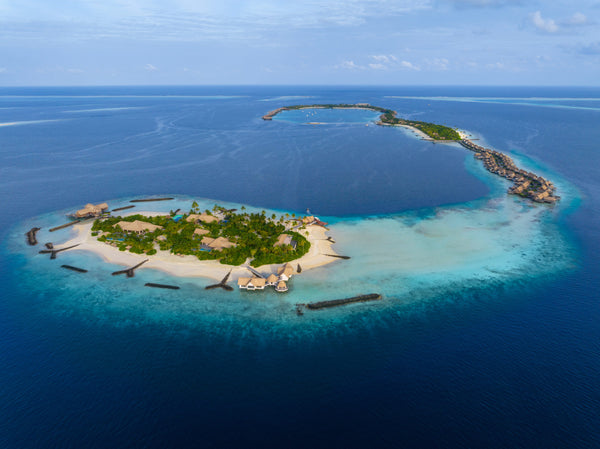
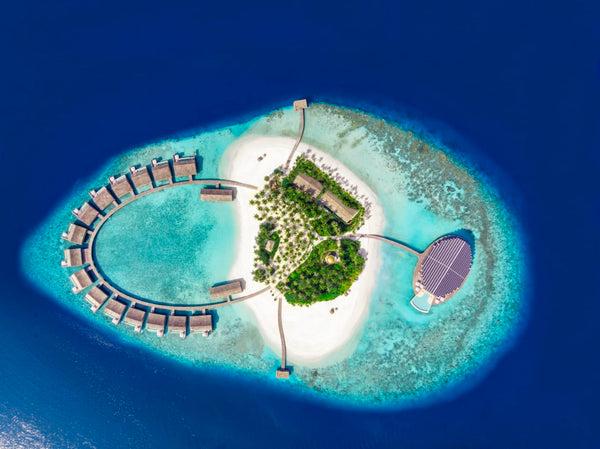
The Maldives is built from atolls. An atoll is a ring of coral reef with islands scattered around it, and inside each ring lies a lagoon, the shallow, sheltered water between the islands and the outer reef. Boats are how everything here connects, and holidays on the water fall into three kinds.
A day charter is a few hours or a full day on a private boat, usually from a resort: a sandbank picnic, a snorkelling stop, a sunset at sea. A sandbank is a small bare island of sand that appears in the lagoon.
An overnight private yacht is a crewed boat for one party, sleeping on board for one night or several. Routes are set around the guests, not a timetable.
A liveaboard, often called a safari boat in the Maldives, is a small ship that carries a group of divers or surfers between atolls for about a week, with cabins and a crew. Many travel with a dhoni, the traditional Maldivian wooden boat, as a tender for diving.
Each one answers a different question, and mixing them up is how holidays go wrong.
Day charters: the easy way in
For most visitors, a day charter is the right amount of yacht. It adds open water, a sandbank and a swim stop to a resort holiday, and the villa is still there at night.
Several resorts run their own. At One&Only Reethi Rah in North Malé Atoll, the resort lists private yacht charters and big-game fishing, with a sportfishing boat for marlin trips and hand-line fishing from a dhoni. Guests of Waldorf Astoria Maldives Ithaafushi in South Malé Atoll arrive on the resort's own yacht, and a private yacht can be arranged for the transfer instead.
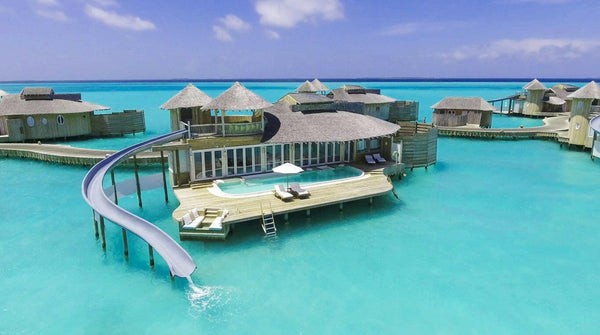
In Baa and Noonu atolls, Soneva runs a private yacht called Soneva in Aqua. Half-day and full-day trips can be booked through the resort's butler during a stay at Soneva Fushi or Soneva Jani, and guests staying elsewhere can charter it too. For a choice between the two islands themselves, the Soneva Fushi and Soneva Jani comparison sets the reef, the villas and the transfers side by side.
Sunset cruises and dolphin trips on a resort's dhoni sit at the gentler end of the same idea. A few hours on deck is enough for most children and for anyone unsure about their sea legs, and the dolphin cruise guide covers what those trips involve.
An overnight on a private yacht
An overnight charter turns the boat into the room. The yacht carries one party only, and the route is shaped around them, with sandbanks, lagoons and reefs chosen along the way rather than a fixed itinerary.
Soneva in Aqua shows what this looks like in practice. It is a 23-metre yacht with two guest cabins, a jacuzzi and a glass-bottomed spa tub on deck, nets at the bow for lounging and a flybridge where guests can sleep under the stars on request. It takes up to six guests overnight. The crew includes a captain, a local skipper, a butler, a sous chef and a wellness therapist, and a dive master, surf instructor or astronomer can join on request. Voyages run from a few hours to several days, around Baa and Noonu and further to Raa and Lhaviyani.
Soneva states two practical points for its own yacht that are worth asking any operator about. First, long open-water crossings are not comfortable. Soneva advises against sailing straight to or from Malé because the trip is long and can be rough, which is tiring for guests. Second, a charter yacht is not an airport transfer. Soneva in Aqua cannot be used for one, because its journey times cannot be guaranteed to match flight schedules.
An overnight suits couples marking an anniversary, honeymooners who have already settled into a resort, and families or small groups who fit in one boat. It suits anyone who gets seasick far less well, and it is a poor first night after a long flight from India.
Liveaboards: diving the Maldives from the water
A liveaboard is the one boat trip that genuinely replaces a resort. The cabin moves with the guests, so a week can cover several atolls.
On many boats the diving runs from a dhoni that travels alongside, carrying the compressor and the gear. Days are built around several dives, with meals and rest in between, and many boats offer nitrox, a breathing gas with extra oxygen that lets divers stay down longer within safe limits.
Three terms come up on every briefing. A channel, or kandu in Dhivehi, is a gap in the atoll's outer reef where water pours in and out with the tide. A drift dive is a dive where divers let the current carry them along a reef or through a channel instead of swimming against it, with the boat following their bubbles. A thila is an underwater mountain or pinnacle that rises from the atoll floor towards the surface, often crowded with fish. Maaya Thila in North Ari Atoll, a pinnacle known for whitetip reef sharks hunting at night, is a classic example.
Liveaboards are for certified divers. PADI, the Professional Association of Diving Instructors, is a dive training agency, and its Open Water Diver course is the entry-level certification. Most boats ask for at least an Open Water certification, and harder routes ask for Advanced Open Water, a minimum number of logged dives and experience of drift diving. Anyone who has never dived should learn at a resort first; the beginner's guide to scuba diving in the Maldives explains how that works.
A resort offers one thing a liveaboard cannot. A house reef is the coral reef you can swim to from the resort itself, ready whenever the mood takes you. On a boat, every swim starts from a ladder or a dhoni.
The main liveaboard routes
The central atolls. North and South Malé, Ari, Rasdhoo and Vaavu make up the classic week, starting and ending in Malé. Distances are short and the variety is wide, which makes it the sensible first liveaboard: channels, thilas, night dives and, in South Ari Atoll, whale sharks. The Maldives Whale Shark Research Programme records them in the South Ari Atoll Marine Protected Area all year round.
The north. Baa, Raa and Lhaviyani atolls draw boats for mantas. Hanifaru Bay in Baa Atoll, a protected area inside a UNESCO Biosphere Reserve, is where manta rays gather to feed in large numbers. Diving is not allowed in the bay; visitors may only snorkel there.
The deep south. Huvadhoo, Fuvahmulah and Addu lie far from Malé, so these trips often start or finish with a domestic flight to a southern airport such as Gan, in Addu Atoll. They are for experienced divers: most dives are drifts through channels in strong ocean currents. Off Fuvahmulah, PADI notes, tiger sharks are present throughout the year, and thresher and hammerhead sharks are most often seen between January and April. Addu holds the British Loyalty, a wreck from the Second World War.
The marine side of each region is covered in more depth in the guide to Maldives marine life and dive regions.
Seasons and sea conditions
The Maldives has two monsoons, and they shape life on a boat more than on an island.
The drier north-east monsoon runs roughly from December to April. Seas are generally calmer, the sun is out more, and visibility underwater is at its best. This is when the deep-south routes run.
The wetter south-west monsoon runs roughly from May to November. There is more rain, the swell builds, and crossings between atolls can be rougher. Plankton rises in the water, which lowers visibility but feeds mantas and whale sharks, so this is the season for Hanifaru Bay and the northern manta routes.
Mantas in the Maldives stay in the country all year and move across the atolls as the monsoons change, according to the Manta Trust. A good boat moves with them, which is one of the strongest arguments for a liveaboard over a single island.
Surfers run the calendar the other way. Surf season runs roughly from April to October, and surf boats work the breaks of the Malé atolls, the central atolls and the far south, moving to wherever the swell is best. Four Seasons Resort Maldives at Kuda Huraa runs a surf cruise and a Seaplane Surfing Safari with its Tropicsurf coaches, a middle path for surfers who want a villa at night.
Rules that apply on the water
Two sets of rules matter for visitors.
The first covers foreign yachts. A foreign yacht sailing into the Maldives needs a cruising permit from the government, applied for at least five days before arrival, and since 2024 its local agent must be a company owned by Maldivians. These are matters for a visiting yacht's owner and agent, not for guests booking a boat already based in the Maldives.
The second covers wildlife. Protected areas such as Hanifaru Bay limit what visitors can do, and the Manta Trust publishes a code of conduct for swimming with mantas: enter the water quietly, stay at least three metres away, never chase or touch the animal, and let it come to you.
Yacht or resort: how to decide
Start with the purpose. If the trip is about diving, a liveaboard delivers more sites and more dives in a week than a stay on a single island. If the trip is about rest, space and a villa, a resort with a day or night on a yacht is the better answer.
Then think about the group. A private yacht is taken by one party, so groups and families who fit comfortably in one boat get the most from it. Couples on a honeymoon often prefer the resort, with one night at sea as the highlight rather than the whole week.
Think about the sea, honestly. Anyone prone to seasickness will have a hard time on a liveaboard in the south-west monsoon, and a small child confined to a deck for a week is a different holiday from a child with a beach.
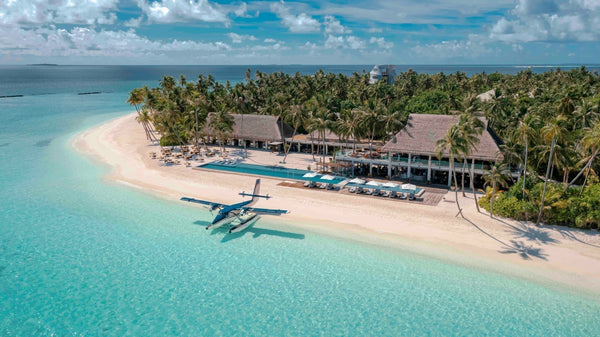
Finally, think about the journey. Liveaboards on the central route begin and end in Malé, which keeps the flights simple. Combining a boat with a resort stay usually means a seaplane or domestic flight at one end. Seaplanes in the Maldives fly in daylight only, so the timing of international flights matters, and the resort or operator should confirm the connection before anything is booked.
Who a boat trip suits
A liveaboard is the right Maldives holiday for certified divers who care more about what is under the water than where they sleep, and for surfers who want waves rather than a resort. An overnight private yacht suits small groups and couples marking an occasion, ideally after a few nights on land. For a first visit, a nervous swimmer or anyone who dreads a rough crossing, the island wins, with a day on a yacht as the treat.
Common questions
Can you stay overnight on a yacht in the Maldives?
Yes. Some resorts and private operators run crewed yachts for a single party, sleeping on board for one night or several and moving between sandbanks, reefs and lagoons. Long open-water crossings can be rough; Soneva, for one, advises against sailing its yacht straight to or from Malé, so ask how far a route goes.
Do you need to be a certified diver for a Maldives liveaboard?
Yes, for almost every dive liveaboard. Most ask for at least an Open Water certification, and routes with strong currents, such as the deep south, ask for Advanced Open Water, logged dives and drift experience. Non-divers and beginners are better served learning at a resort dive centre first.
When is the best time for a liveaboard in the Maldives?
It depends on the goal. The drier north-east monsoon, roughly December to April, brings calmer seas and the clearest water, and the deep-south routes run then. The wetter south-west monsoon, roughly May to November, brings plankton, lower visibility and the big manta gatherings in Baa Atoll.
Is a yacht charter good for a Maldives honeymoon?
As part of one, yes. A sunset charter or a single night on a private yacht makes a strong highlight, with open water and nobody else on board. A full week at sea suits few honeymooners, since space is limited, crossings can be choppy and the villa, spa and beach are left behind.
Can a yacht take you from Malé airport to your resort?
Only where the resort runs its own yachts as transfers, as some in the atolls near Malé do. A charter yacht is a different matter: Soneva in Aqua, for example, cannot be used for airport transfers because its timings cannot be matched to flights. Check the transfer with the resort before booking international flights.