Best Time to Visit the Maldives: Monsoons, Mantas and the Month That Suits Your Trip

In this article
Updated October 2026
The driest, sunniest and calmest months in the Maldives are January to March, with December and April either side as the turning points, and that is also when the islands are busiest. From about mid-May to November the south-west monsoon brings more rain, more wind and rougher seas, but also the big manta gatherings in Baa Atoll and the surf season. Whale sharks stay in South Ari Atoll all year, so for them any month works.
How the two monsoons shape the year
The Maldives has two seasons, and both are named after the wind. The Maldives Meteorological Service sets the drier north-east monsoon at January to March and the wetter south-west monsoon at mid-May to November, with December and April as the months when one hands over to the other. In practice, most travellers think of the drier north-east monsoon as running roughly December to April, and the wetter south-west monsoon as roughly May to November.
The average temperature runs from about 25 to 32 degrees Celsius all year, and the warmest stretch is March and April, lasting until the south-west monsoon arrives in mid-May. What changes through the year is rain, wind, sunshine and the state of the sea.
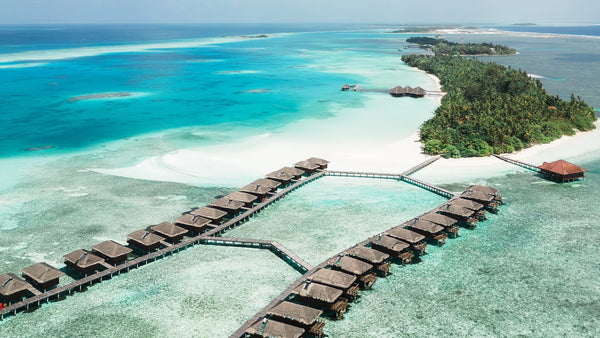
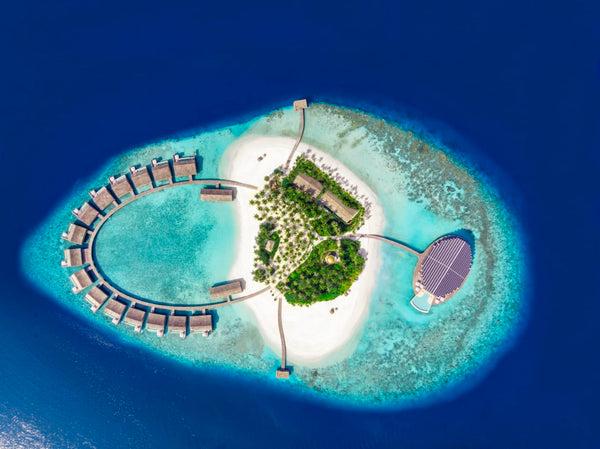
An atoll is a ring of coral reef with islands scattered around it. Each one encloses a lagoon, the shallow, sheltered water inside the reef. Gaps in the rim, called channels or kandus, let the open ocean flow in and out with the tide. Which side of an atoll the wind and current come from decides a great deal about a holiday: where the water is clearest, where the mantas feed, which beaches are calm and which crossings are choppy.
The drier north-east monsoon, roughly December to April
These are the months most people picture. January, February and March are the sunniest of the year: the Maldives Meteorological Service records 10 to 11 hours of sunshine a day on average, against 7 to 9 hours in the other months. Seas are generally calmer, winds lighter and boat trips more dependable.
Underwater, this is the season for clear water. Currents run across the country mainly from east to west, visibility can pass 30 metres, especially in North Malé, South Malé and Ari atolls.
The catch is demand. December to April is the high season, with more crowds and rates generally higher than in the wetter months, and rates rise further towards Christmas and New Year.
The wetter south-west monsoon, roughly May to November
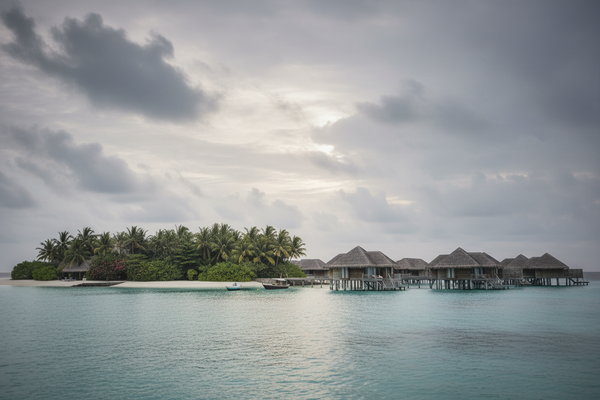
The south-west monsoon brings more rain, stronger winds from the west and south-west, and more cloud. It does not mean rain all day. The Maldives Meteorological Service describes the rain here as normally showery and short, with sunny periods in between.
Some days are different. A band of rough weather can sit over the country for several days at a time, with grey skies, strong wind and choppy water, and in those spells boat trips and flights can be delayed or cancelled. The rain and wind also stir up the water, so visibility drops compared with the dry months.
The reason to come anyway is the plankton. The same winds and currents that cloud the water feed it, and plankton is what draws the mantas in to feed. Whale sharks in South Ari are seen all year, so they do not depend on the season. The surf is up too. And because demand is lower, rates are generally lower than in the high season.
How the weather differs from north to south
The Maldives stretches across the Equator, from Haa Alifu in the far north to Addu in the far south, and the weather is not the same along its length.
Rain increases from north to south. The Maldives Meteorological Service gives annual rainfall of about 1,779 millimetres in the northern atolls, 1,966 in the central atolls and 2,218 in the southern atolls. The south also has a less distinct dry season. Showers and thunderstorms can come at any time of year there, and the southernmost weather stations record their heaviest rain around December, not in the middle of the south-west monsoon.
In plain terms, the north has the sharper contrast between a bright dry season and a wetter monsoon, while the far south, including Laamu, Huvadhoo and Addu, sees more rain overall but fewer extremes between seasons. Anyone travelling in January who wants the most reliable sunshine has a slightly better chance in the central and northern atolls.
Seaplanes, speedboats and the weather
How a resort is reached matters more in the wet months than the dry ones.
Seaplanes in the Maldives fly in daylight only, and they need decent weather too. Rain, storms, poor visibility and rough seas can delay or cancel seaplane flights, and this happens more often in the south-west monsoon. When it does, guests wait at the seaplane terminal or, if the day runs out, spend a night in Malé or Hulhumalé and fly the next morning.
A speedboat island close to the airport takes the seaplane out of the arrival day, though the crossing can be bumpy when the wind is up. Four Seasons Resort Maldives at Kuda Huraa in North Malé Atoll, for example, is about 25 minutes from Velana International Airport by the resort's own speedboat, which runs 24 hours a day.
For a seaplane island in the wet months, the safest plan is a morning landing in Malé and a loose first afternoon, so a short delay costs a lunch rather than a night.
Manta rays: Baa Atoll and the monsoon switch
Reef mantas move across the Maldives with the monsoon. The Manta Trust, the charity that studies them here, describes the population shifting east to west and back again each time the season turns, with the biggest feeding gatherings generally on the sheltered, downwind sides of the atolls.
That gives a simple rule. In the north-east monsoon, roughly December to April, mantas are mostly on the western sides of the atolls. In the south-west monsoon, roughly May to November, they move to the eastern sides.
The headline site is Hanifaru Bay in Baa Atoll, a small, shallow bay inside a UNESCO Biosphere Reserve where, in the south-west monsoon, plankton collects and mantas arrive to feed, sometimes in large numbers, with whale sharks now and then. The season runs roughly May to November. Hanifaru is a Marine Protected Area, diving is banned inside the bay, and visitors snorkel in groups led by a certified Hanifaru guide, under limits on boats, numbers and time in the water. Closer to the airport, Manta Point in North Malé Atoll is a cleaning station at its best in the same season.
At Four Seasons Resort Maldives at Landaa Giraavaru in Baa Atoll, the Manta-on-Call service alerts guests when mantas are spotted nearby in season and takes them out by speedboat to snorkel. A house reef is the coral reef you can swim to from the resort itself, and the one here is modest, so the mantas are the reason to go, not the snorkelling off the beach. Sightings anywhere depend on tide, current and plankton, and nobody can promise them on a given day.
For more on where each animal turns up, read the guide to marine life by atoll and season, or go straight to Baa Atoll resorts for manta season.
Whale sharks: South Ari, every month
Whale sharks are the exception to the seasonal rule. In the South Ari Marine Protected Area, at the southern end of Ari Atoll, they are seen in every month of the year, mostly young males, usually along the edge of the reef. That makes South Ari a choice for any date.
The weather still matters on the day. Encounters are mostly on snorkel, from a boat that searches the reef edge, and rough seas can cancel a trip. LUX* South Ari Atoll sits beside the protected area and runs its own whale shark trip with its marine biology team, which the resort may call off for weather. Its house reef is thin, and most of the snorkelling there is by boat. Budget travellers reach the same reef from Dhigurah, a local island, meaning an inhabited island where Maldivians live, with guesthouses rather than resorts.
A stay of several nights gives more than one chance if the first morning is rough. The guide to South Ari Atoll resorts for whale shark trips covers the options.
Surf season
Surfing in the Maldives follows the south-west monsoon. The main season runs from about April to October, when the swell comes up from the south. North and South Malé atolls hold many of the breaks, and both are at their best in these months. The southern atolls have shorter windows of their own, early and late in the season, around March and April and again around October and November.
Outside that window, from about November to March, the swell is less consistent.
The North Malé speedboat resort described under transfers above is also the surf island, with coaching in the sheltered lagoon for beginners and boats to nearby reef breaks such as Sultans. On a budget, Thulusdhoo and Himmafushi are local islands close to the North Malé breaks.
Turtles and nesting
Green turtles and hawksbills live on Maldivian reefs all year, so seeing them does not need a season. Nesting is another matter. The Olive Ridley Project, the charity that studies turtles here, found in a 2026 study that there is no single defined nesting season in the Maldives, but green turtle nesting peaks between June and August. Its key green turtle nesting beaches are in Baa, Laamu, Lhaviyani and Noonu atolls. For simply swimming with turtles, a resort with a good house reef is the most reliable choice in any month.
Busy dates for Indian travellers
The calendar decides crowds as much as the weather does. Four periods are busy.
The festive season from Christmas to New Year sits at the top of the high season, when rates rise further, so plans are worth settling well ahead.
Diwali falls on 8 November 2026 and on 29 October 2027. Both land in the tail of the south-west monsoon, and the festive holidays around them are a busy time for international travel from India.
Indian summer school holidays begin in most states between mid-April and May and run into June, in some states to the end of the month. That puts family trips around the start of the south-west monsoon, when the rains set in.
The other big window is the stretch from January to March, which sits in the best weather and draws winter-sun travellers as well.
Ramadan and local islands
Ramadan follows the Islamic calendar, so its dates shift from year to year. In 2027 it is expected to begin around 8 February, subject to the sighting of the moon.
On resort islands, life carries on as normal. On local islands the whole community fasts from dawn to sunset. Most cafés and restaurants close during daylight hours and reopen around sunset, when the fast is broken, many shops shorten their hours, and visitors should not eat, drink or smoke in public view during the day. Some guesthouses serve their own guests discreetly in a private area. Excursions may still run, though times can shift. The local island rules of modest dress and no alcohol apply all year.
For a guesthouse holiday on an island such as Maafushi, Ramadan is a time to plan meals around the guesthouse rather than the high street. After dark the mood changes: cafés reopen once the fast is broken and stay open late into the evening, and shops reopen too.
Month by month
- December: a turning month between the two monsoons. Weather is usually settling, and rates rise towards the Christmas and New Year fortnight. Mantas begin moving to the western sides of the atolls.
- January: among the sunniest and calmest months. Clear water for diving. High season.
- February: dry, bright and calm, with very good visibility. In 2027, Ramadan is expected to begin around 8 February, which affects local islands, not resorts.
- March: still dry, and heating up towards the warmest weeks of the year. Southern atolls open a short surf window.
- April: the second turning month, and still among the warmest weeks of the year. The surf season begins in North Malé.
- May: the south-west monsoon normally sets in around mid-month, with more rain and stronger wind. Indian summer holidays are under way, Hanifaru's manta season opens and rates are generally lower.
- June: wetter and windier, with surf and mantas both in season, and Indian school holidays running through much of the month.
- July and August: the heart of the south-west monsoon. Mantas gather on the eastern sides of the atolls, Hanifaru is in full season, and green turtle nesting peaks.
- September: still monsoon weather, with sunny spells between showers. Surf and mantas continue.
- October: south-west monsoon weather continues, with showers and sunny spells. Diwali falls on 29 October in 2027, and the southern atolls have their late surf window.
- November: the last month of the south-west monsoon, and still showery. Diwali falls on 8 November in 2026. Mantas are still in Baa.
Whale sharks in South Ari and turtles on the reefs are possible in every one of these months.
Who should go when
Honeymooners and first-time visitors who want the postcard version, with long sunny days and calm water, should aim for January to March and accept that this is the busiest and most sought-after time. Couples who would rather swim with mantas than chase sunshine should look at Baa Atoll in the south-west monsoon and treat a showery afternoon as part of the deal.
Families tied to Indian school holidays will travel at the start of the south-west monsoon. A speedboat island close to Malé, a resort with plenty to do under cover and a stay of five nights or more makes a showery spell easy to absorb.
Divers should choose the animal first: the clearest water in the north-east monsoon, mantas in the south-west, whale sharks in South Ari at any time. Surfers belong in North Malé between April and October.
For what to do once the date is set, read the guide to things to do in the Maldives beyond the beach.
There is no bad month in the Maldives, only a bad match. The dry season gives the best odds of sun and the hardest dates to book; the wet season gives quieter islands and the big animals in exchange for some grey days. Pick the reason for the trip, and the month follows from it.
Common questions
What is the best month to visit the Maldives?
For sunshine and calm seas, January to March is the safest window, with 10 to 11 hours of sun a day on average. For mantas in big numbers, Baa Atoll in the south-west monsoon, roughly May to November. For whale sharks, any month in South Ari. For surf, April to October.
Is it worth going to the Maldives in monsoon season?
For flexible travellers, often yes: the south-west monsoon, roughly May to November, trades some grey, windy days and the odd seaplane delay for quieter islands, the Baa Atoll mantas and the surf. The guide to the Maldives in the green season sets out who it suits, who it doesn't and how to plan a showery week.
When is the rainy season in the Maldives?
The wetter south-west monsoon runs roughly from May to November, setting in around mid-May according to the Maldives Meteorological Service. The drier north-east monsoon runs roughly from December to April. The southern atolls get more rain overall and a less clear-cut dry season, with showers possible at any time of year.
When can you see manta rays in the Maldives?
All year, but they move with the monsoon. From roughly December to April they gather on the western sides of the atolls; from roughly May to November they move to the eastern sides, including Hanifaru Bay in Baa Atoll, where diving is banned and visitors snorkel with a certified guide. Sightings depend on tide and plankton.
Is June a good time to visit the Maldives?
June is in the wetter south-west monsoon, so expect showers, stronger wind and lower visibility underwater than in the dry months. It is also manta and surf season, rates are generally lower, and it suits Indian school holidays. Choose a speedboat island or allow a loose first day if the resort is reached by seaplane.
Is the Maldives busy at Christmas and Diwali?
Yes. Christmas and New Year sit at the top of the high season, when rates rise further. Diwali, on 8 November 2026 and 29 October 2027, falls in the quieter wet months, but the festive holidays are a busy time for international travel from India. Both are worth settling well in advance.