South Ari Atoll Resorts for Whale Shark Trips: Eight Islands Compared on the Reef, the Transfer and the Trip

In this article
Updated October 2026
Every resort on this shortlist sits in South Ari Atoll, where whale sharks are seen in every month, and every one is within a boat ride of them. What separates them is the reef off the beach, the transfer and the kind of island. A sighting is never certain, so the house reef is what fills the mornings when the sea is rough or the sharks are somewhere else.
What to weigh before choosing a resort
An atoll is a ring of coral reef with islands scattered around it. South Ari, the southern half of Ari Atoll west of Malé, holds the South Ari Marine Protected Area, the stretch along the atoll's southern edge where the whale sharks gather. How the boat trips work, the rules in the water and what to expect on the day are all in the guide to seeing whale sharks in South Ari Atoll. This page is about where to stay.
Three things decide it. The first is the house reef. A house reef is the coral reef you can swim to from the resort itself, and in South Ari they run from thin to exceptional. The second is the transfer: all of these islands can be reached by seaplane, and several by a domestic flight and a boat, most often through Maamigili, the local island with South Ari's airport. The third is the island itself, large and lively or small and quiet.
Beside the whale shark reef, with the snorkelling by boat
LUX* South Ari Atoll sits beside the South Ari Marine Protected Area, and its marine biology team leads the resort's own whale shark trip. The house reef is thin. The lagoon, the shallow, sheltered water between the island and its outer reef, is sand: lovely for swimming, close to empty for snorkelling, and the coral in front of the water villas is dead. Instead, a free guided boat takes guests out to a reef where turtles and mantas are common, and the one good spot within reach is by the seaplane jetty, where coral has been planted and reef sharks come in behind the boats. Book it for the whale sharks, not for snorkelling off the villa steps. The seaplane takes about 25 minutes.
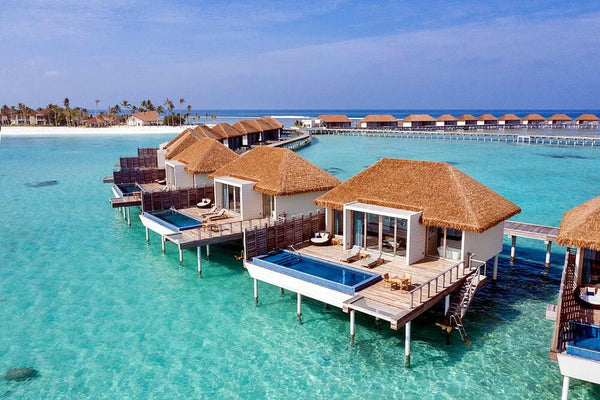
Radisson Blu Resort Maldives is a large resort where every villa has its own pool, and its dive and water sports centre runs a whale shark cruise. The house reef is thin, because the island is man-made and no reef rings it. Snorkelling happens in two lagoon areas in front of the restaurants, with fish and blacktip reef sharks but little living coral, a strong current and, on some mornings, water too shallow to swim. This is a boat-diving holiday more than a beach-snorkelling one. The resort chooses the transfer: a seaplane of about 30 minutes, or a domestic flight to Maamigili and a boat.
A big, busy island near the southern reef
Villa Park Sun Island is a large, busy island built for families and groups, and the whale shark trip offered to its guests heads for the southernmost outer reef of the atoll. The house reef is fine rather than strong. There is one good stretch, reached by a ladder off the jetty behind the Italian restaurant, with more live coral and bigger fish than anywhere else on the island. The entry is a straight drop off the ladder, so it suits confident swimmers, and the rest of the lagoon is shallow sand with little coral. Getting there is a domestic flight to Maamigili and a five-minute boat, with a seaplane of about 35 minutes as the other way in.
Strong house reefs for the days between trips
Nova Maldives sits inside South Ari's whale shark area and runs a whale shark excursion, with a marine biology team on the island. Its house reef is strong: excellent fish life, big sharks, rays and coral regrowth better than most of South Ari, reached by marked passages. The reef edge is a long way out in places and the current runs, so swimming the whole island is for confident swimmers, though there are sheltered stretches for everyone else. The seaplane takes about 25 minutes.
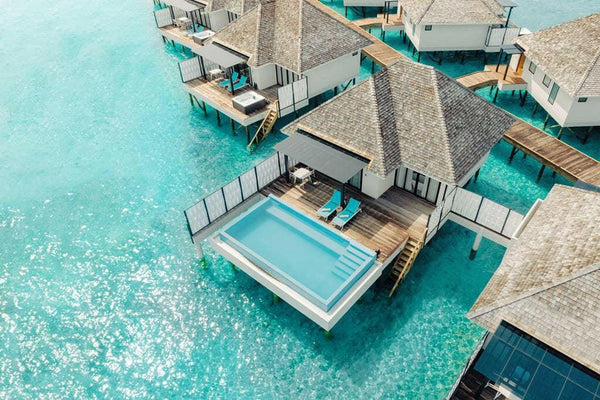
OUTRIGGER Maldives Maafushivaru Resort is a small island with a strong house reef, and its whale shark snorkelling trips are guided by the resident marine biologist. The easiest way in is the ladder at the end of the pier by the Over Water Villas with Private Pool, which puts a swimmer on the drop-off, where the reef falls away into deep water, with almost no swim. A gentle current circles the island, so get in up-current and come out at the next cut rather than swimming back. Sharks and rays are the reliable part: blacktips, whitetips and nurse sharks close in, eagle rays and stingrays further out. The coral is good rather than exceptional. Do not try to swim across to Lonubo, the island nearby: the water between is deep and the current runs hard. The seaplane takes about 25 minutes.
Drift Thelu Veliga Retreat is a small island of beach and water villas with its own dive centre, and South Ari's whale sharks are a short boat ride out. Its house reef is strong and rings the island, so on a calm day a snorkeller can go most of the way round without a boat. The swim out is the catch: the drop-off sits well off the beach, the dependable way through the shallows is the cut by the jetty, and a cross-current runs on the way out. Whitetip reef sharks, turtles, eagle rays and dense fish are the reward. The coral was badly damaged in the past and is still rebuilding. The seaplane takes about 35 minutes, and the other way in is a domestic flight to Maamigili and a boat.
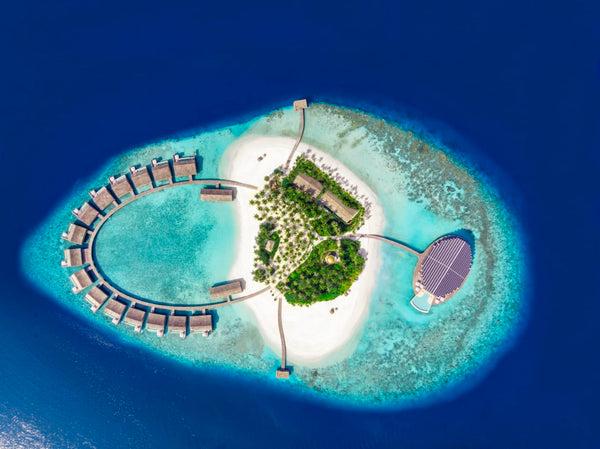
V Villas Maldives at Mirihi is a small island of 42 beach and water villas, renovated, expanded and reopened under Accor's MGallery Collection. Swimming with whale sharks is among its experiences, there is a dive centre on the island, and the resort has its own wooden sailing yacht. The house reef is strong. Guests step onto it from the water villas or cross the lagoon from the beach, for eagle rays, turtles, blacktip reef sharks, octopus and schooling batfish, and a resident marine scientist runs the coral nursery work. Three catches: the water villa entry is awkward at low tide, the coral is recovering rather than intact, and the fish life is not consistent, with plenty on some visits and very little on others. The seaplane takes about 35 minutes, and when a flight lands too late for it, the resort can bring guests in by domestic flight and a boat.
An exceptional house reef
Constance Moofushi is the island on this list for the reef itself, and its house reef is exceptional. It starts a few metres off the beach, and the marine life is routine rather than lucky: blacktip reef sharks, turtles, eagle rays, stingrays, moray eels and manta rays. The richest stretches are off the reef by the pool and in front of the boathouse. It is a reef for animals rather than a coral garden, and the current can run strong in places, so ask the dive centre where to get in on the day. A marine biologist on the island gives talks on the whale sharks, which are a boat ride away. The resort is reached by seaplane from Velana International Airport.
Getting there, and the first night
Seaplanes in the Maldives fly in daylight only, so an evening landing at Velana International Airport can mean a night in Malé before reaching a seaplane island. A domestic flight and a boat is the other way in for four of the resorts above.
When to go
The Maldives Whale Shark Research Programme, the research group that studies South Ari's sharks, has found no seasonal peak in their numbers, so the month matters less than the sea. Boat trips are easier in the drier north-east monsoon, roughly December to April, and more often called off for wind and rough water in the wetter south-west monsoon, roughly May to November. The guide to the best time to visit the Maldives has the full calendar.
A local island instead
Travellers who would rather stay in a guest house than a resort can base themselves on Dhigurah, Dhangethi or Maamigili, inhabited local islands on or close to the protected area. Expect no alcohol, and cover shoulders and knees away from the designated bikini beach. The Dhigurah island guide, the Dhangethi island guide and the Maamigili island guide cover where to stay.
Which island suits whom
For a short stay built around the whale sharks, an island beside the reef with its own trip does the job, and a thin house reef matters little. For a longer stay, or for anyone who wants to snorkel every day, the reef should decide it, and the strong and exceptional reefs turn a cancelled trip into a good morning anyway. Big islands suit families and groups; the small ones suit couples and divers who want quiet. On any of them, allow several mornings: the sharks are there all year, but the sea does not always agree.
Common questions
Do South Ari resorts run their own whale shark trips?
Most resorts in South Ari offer whale shark trips to their own guests. Some are led by the resort's marine biologist or marine biology team, others by the dive centre or an excursion partner. Trips go by boat to the outer reef, and weather can call them off, so ask how the trip runs before booking.
Does the house reef matter on a whale shark holiday?
Yes, more than most people expect. A whale shark trip takes part of a day and a sighting is never guaranteed, so most of the holiday is spent on the island. A strong house reef means good snorkelling straight from the beach, while a thin one means taking a boat for every swim.
Can you see whale sharks from a South Ari resort without a boat trip?
Not reliably. The whale sharks are met on the outer reef of the South Ari Marine Protected Area, the ocean-facing edge of the atoll, and encounters happen on boat trips there. A good house reef brings turtles, reef sharks and rays instead, and makes good use of the days between trips.
How do you get to a resort in South Ari Atoll?
Most South Ari resorts are reached by seaplane from Velana International Airport, a flight of about 25 to 35 minutes. Seaplanes fly in daylight only, so a late arrival means a night in Malé. Some resorts can also be reached by a domestic flight to Maamigili and a short boat ride.
Is South Ari good for a short Maldives trip?
It can be, as long as the flight lands in daylight and the stay allows more than one whale shark attempt. One morning may be lost to wind or simply draw a blank, so a stay of several nights gives a fairer chance of an encounter and time on the reef, and a longer one adds dives and calmer days.