Six Senses Laamu Review: Seagrass, Surf and the Southern Maldives

In this article
Updated October 2026
Six Senses Laamu is an island in the south of the Maldives, about an hour's seaplane flight from Malé. In return for the journey you get a nature-led island where turtles feed in the lagoon most mornings, surf breaks a few minutes away by boat, and a team of marine biologists working on the reef. The lagoon is seagrass rather than white sand, and that is a choice worth understanding before you book.
What stands out
Three things set Six Senses Laamu apart. The marine life: the resort protects a seagrass meadow of around 385,000 square metres, and turtles, rays and sharks feed in it close to the villas. The science: the Maldives Underwater Initiative puts marine biologists from the resort and partners such as the Manta Trust and the Olive Ridley Project on the island, studying mantas, turtles and coral. And the surf, with Tropicsurf running boat trips to the breaks around the atoll.
The compromise is the other side of the same coin. The lagoon is green and grassy in places rather than postcard white, and the island is a long way from anywhere.
What the island is like
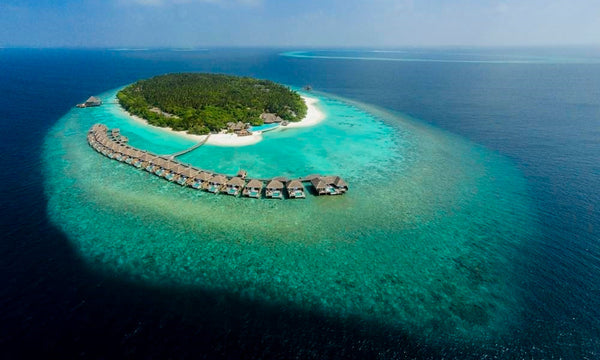
Six Senses Laamu sits on Olhuveli island in Laamu Atoll, in the south of the Maldives. An atoll is a ring of coral reef with islands scattered around it, and Laamu lies a long way from the busier atolls around Malé.
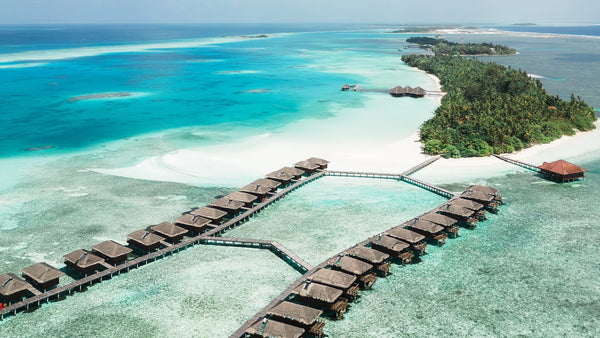
The island is long and green, with the water villas on three jetties and a central overwater building holding reception, the dive centre and the library. Shoes come off on arrival and go into a cloth bag. Every villa has bicycles, labelled with your initials, and an electric buggy is there when you want one.
Many resorts in the Maldives clear seagrass for the look of white sand. Six Senses Laamu keeps all of it, because it feeds turtles, shelters young fish and stores carbon, and since the meadows have grown, sightings of turtles, sharks and rays around the island have roughly doubled. The lagoon side carries seaweed for the same reason; the sunset side has the cleaner beaches.
Arriving
The resort now brings guests in by direct seaplane, about 65 minutes from Velana International Airport in Malé. You wait in a seaplane lounge with refreshments and Wi-Fi. Seaplanes in the Maldives fly in daylight only, so you need to land in Malé by mid-afternoon to fly the same day.
A domestic flight to Kadhdhoo, the airport in Laamu, followed by a speedboat, is available on request for guests whose flights don't fit the seaplane. On some days domestic flights run into the evening, which can help a late arrival from Delhi, Mumbai or Bengaluru. Ask about it by name.
Going home, the seaplane can't get you to Malé early in the morning. Plan on an international departure no earlier than mid-morning.
The villas
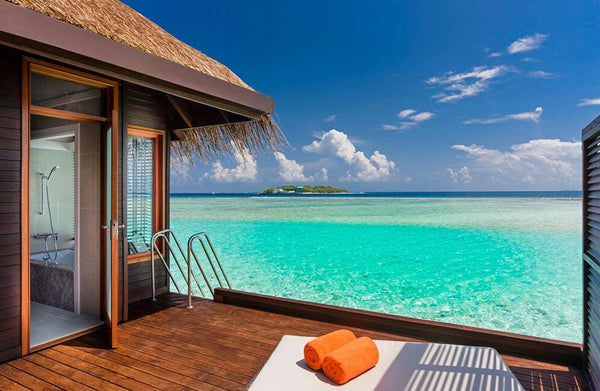
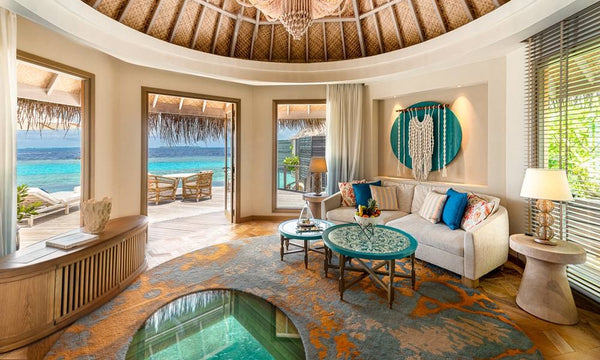
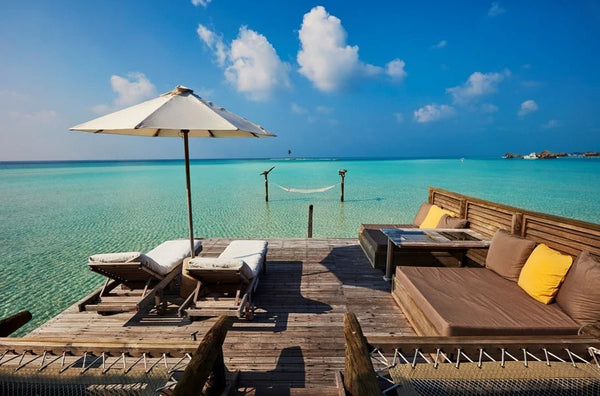
The water villas are the heart of the place, and all of them share the same generous detail: a sunken glass-bottomed bathtub, hammocks or nets slung over the water, a ladder into the sea and a daybed on the roof. The standard water villas run to 108 square metres and come facing the lagoon, the ocean or the sunset; the pool versions add an infinity pool and run to 126 square metres. The villas at the ends of the jetties feel the most private.
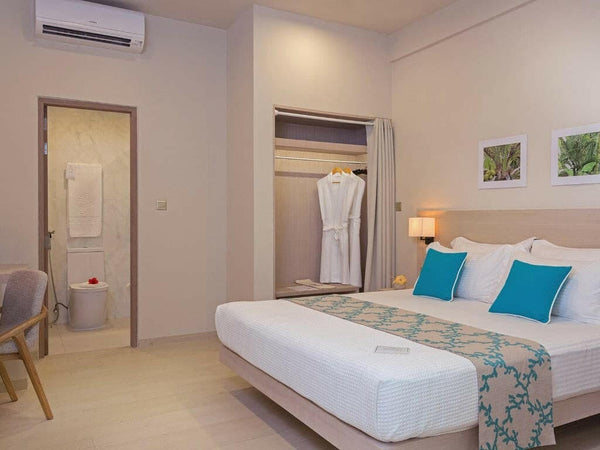
On land, the beach villas with pool are much larger at 238 square metres, with a treetop deck above. The family beach villas add a separate children's bedroom with its own bathroom, and there are two-bedroom beach villas for bigger families. At the top is The Retreat, a three- or four-bedroom villa with a 20-metre lap pool and hammocks over the water.
Families with young children are better served on the beach. The standard water villas are tight for more than two.
Eating and drinking
Longitude is the main restaurant, open-air and over the water, with breakfast and themed dinners leaning towards South Asian cooking. Leaf, for adults only, cooks Mediterranean food from the organic garden it overlooks. Zen serves Japanese fusion, and Kaji, also adults only, is the teppanyaki counter. Sip Sip, by the pool on the sunset side, does wood-fired pizza, grills and pasta, and Chill Bar is a multi-level bar over the house reef, with a DJ in the evenings.
Two smaller things say a great deal about the island. The Ice and Chocolate Studio serves free ice cream and sorbet and makes its own chocolate. And Altitude is a spun-glass wine tower holding more than 300 labels, where dinners are served in the tower itself. A plant-forward Blue Zone menu runs alongside the rest.
The spa, the science and the children
The Six Senses Spa has nine treatment rooms built as nests, some facing the ocean and some in the trees, with Ayurvedic therapies, wellness screenings and free wellness workshops. There is a gym and a yoga pavilion looking over the lagoon.
SHELL, the Sea Hub of Environmental Learning, is the marine science centre, with a lab and exhibitions open to guests. Marine biologists here have released millions of coral larvae onto the house reef and track the mantas at Hithadhoo Corner, a cleaning station a short boat ride away. A guided snorkel with one of them runs every morning at no charge.
The Den, the kids' club, is free and takes children from three, with games, baking, crafts, junior marine biology and cinema nights. There is a teen programme and babysitting. There is also a medical clinic, with a doctor on call.
The water
A house reef is the coral reef you can swim to from the resort itself. Here it runs along the south side of the island, and the easiest entry is the ladder at Chill Bar, which puts you on the reef shelf within a minute. Guests report whitetip and blacktip sharks, eagle rays, green turtles and giant clams. The coral right in front of Chill Bar was damaged by past warming and improves a few minutes' swim further out.
The lagoon is a separate experience. Turtles feed in the seagrass beneath the water villas most mornings, and a gear hut at the start of the first jetty makes it easy to drop in.
The surf programme is run by Tropicsurf. The breaks include Yin Yang, about five minutes away by boat, and the long right at Machines, with the best waves roughly from April to October. Deep Blue Divers, the resort's own dive centre, covers the channels and Hithadhoo Corner, where mantas come to be cleaned.
Where the compromises are
The lagoon is the first. Seagrass and seaweed are the price of the turtles. If you want a white-sand lagoon, this is the wrong island.
The second is the journey. An hour by seaplane each way, in daylight only, shapes both ends of the trip, and a three-night stay spends a large share of its time getting there and back.
The third is size. The standard water villas are compact for families, and the jetties put some villas a long walk from the restaurants.
Who will love it, and who won't
Six Senses Laamu suits couples, surfers and anyone who wants nature close up: turtles under the deck, marine biologists at breakfast and a remote atoll with very little around it. It suits anyone who wants a white-sand lagoon, a short transfer or a lively evening scene considerably less well.
Common questions
How do you get to Six Senses Laamu?
By direct seaplane from Malé, about 65 minutes, in daylight only, so you need to land in Malé by mid-afternoon. A domestic flight to Kadhdhoo airport in Laamu, followed by a speedboat, is available on request for flights that don't fit the seaplane.
Why is the lagoon at Six Senses Laamu not white sand?
The resort protects a seagrass meadow of around 385,000 square metres rather than clearing it, as many resorts do. The seagrass feeds turtles and shelters young fish, and turtle, shark and ray sightings have roughly doubled since it grew back. The sunset side has the cleaner beaches.
Is there surfing at Six Senses Laamu?
Yes. Tropicsurf runs the programme, with breaks such as Yin Yang about five minutes away by boat and the long right at Machines. Beginners learn in the lagoon. The best waves come roughly between April and October.
Is the snorkelling good at Six Senses Laamu?
Yes, with two different experiences. The house reef runs along the south side, reached from the Chill Bar ladder, with sharks, eagle rays and turtles. The seagrass lagoon has turtles feeding under the villas. A free guided snorkel with a marine biologist runs every morning.
Is Six Senses Laamu good for families?
Yes, with the right villa. The Den kids' club is free and takes children from three, there is a teen programme and babysitting, and the family beach villas have a separate children's bedroom. The standard water villas are tight for families.